I once had a job writing deal copy for Groupon. My coworkers and I were given a seemingly endless queue of discounted offers for laser hair removal and Thai food and stand-up paddleboarding lessons and so on, forever and ever, world without end. Our assignment was to transform the details of the deals into ostensibly humorous emails and website postings.
The company, which at the time took pride in its quirky editorial voice, maintained a surprisingly long and detailed style guide on all the finer points of crafting a proper Groupon. The text we churned out might have been silly, but the authors of this weighty instruction manual were evidently very serious about helping people save money on zapping their pubes.
The hardest part of the whole job was coming up with the jokey one-sentence intros that every Groupon was supposed to start out with. Something like, oh I don’t know . . . Modern technology has made many unpleasant tasks easier, from removing copywriting jobs with AI to removing pubes with lasers.
I’m out of practice.
From time to time, the other writers and I would have to attend workshops led by the grand pooh-bahs of Groupon composition. In one of those sessions, an exercise involved coming up with jokey one-sentence intros on the spot, using the company’s various deal types as prompts.
I can’t remember the exact prompt I was given, but I do know it was something outdoorsy—a mountain bike rental, a guided hike, something like that. So the jokey intro I spat out was along the lines of: A guided hike brings you closer to nature, much like sharing a hot tub with an elk.
Now, I’ll grant you that line isn’t exactly a laugh riot, and I’ll grant you it carries a whiff of bestiality besides. But then the guy leading the workshop told me the punchline would be better if it was “sharing a strawberry with a deer,” and I just completely lost faith in the whole enterprise.
I mean, why master the complex ins and outs of Groupon-writing—enough to lead a workshop no less—if you’re only going to produce prose that doesn’t even rise to the comedy level of most Mad Libs?
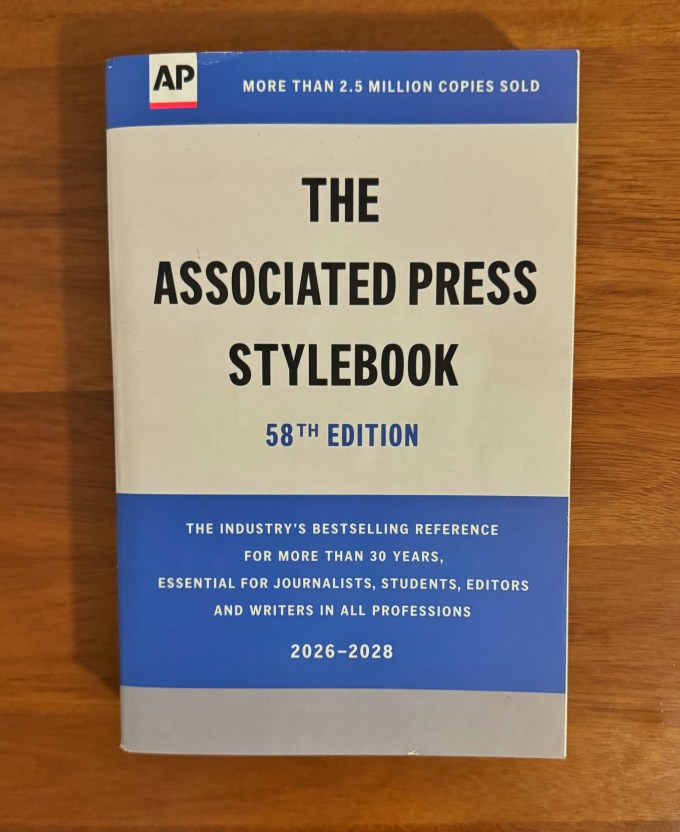
I don’t know why some style guides and forms of writing instruction make me rebellious while others inspire my fervent devotion. Take the AP Stylebook, for instance. I love it. In fact, it’s what springs to mind whenever someone asks me to name my favorite book. If you ever hear me placing Marilynne Robinson’s Gilead in the top spot, you’ll know that I have gone with my second choice to avoid sounding like a weirdo.
What I admire about the AP Stylebook is its commitment to clarity, consistency, and expressing things plainly. (Now that I think of it, Marilynne Robinson’s work has similar qualities). As a writer and editor, I consult the Stylebook many times a day for guidance on grammar, spelling, usage, punctuation, capitalization, and, as the book’s forward puts it, “significant issues of our time.”
I almost always find that guidance illuminating, even when I can’t bring myself to follow orders such as, “Do not put a comma before the conjunction in most simple series” or “Purge irrelevant details.”
I do wish I had the spiral-bound version of the 58th edition (2026–2028) instead of the regular paperback, but I was given the book as a gift so that’s my spouse’s fault.

