Last year I joined a gay book club. The selections are all by and/or about LGBTQ+ people (broadly defined), and the club’s members are all gay nerds (narrowly defined).
We usually meet at the Boston Public Library in Copley Square on the last Wednesday of the month. Since I joined in fall 2023, every book selected has been a novel, with only a few exceptions. My favorites: The Late Americans by Brandon Taylor, Open Throat by Henry Hoke, Confessions of a Mask by Yukio Mishima, Blackouts by Justin Torres, Martyr! by Kaveh Akbar, and All Fours by Miranda July.
I seem to like the chosen book more frequently than the other people in the group do. They tend to pick a lot of nits. Though that could be in order to have something to say. I don’t know if you’ve noticed, but speaking negatively about somebody else’s artistic output is always easier than speaking positively.
Negative analysis is more fun and more persuasive, too. Critics’ raves are rarely as entertaining as the pans, after all.
And have you ever attended a writing workshop or art class or the like where only sticky-sweet feedback is allowed? You don’t believe a word of it.
At club meetings, the discussion often begins with this one guy saying he didn’t like any of the book’s characters. I kinda wanna be like, Okay, but since you say that every time, maybe we should consider the possibility that it’s not them, it’s you.
Besides, a work doesn’t necessarily need likable characters to be great. Look at Hamlet. Or Medea. Or Vanderpump Rules.
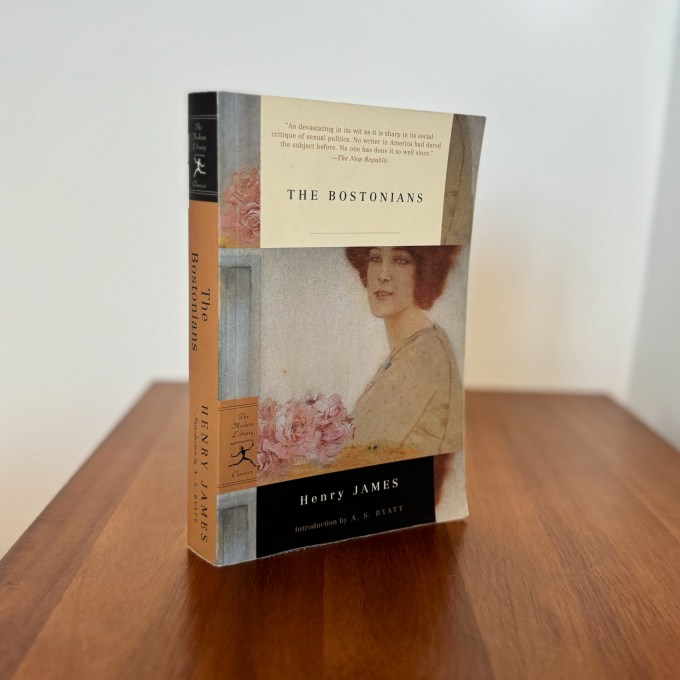
Last month the group read The Bostonians, Henry James’s 1886 satire about New England progressives. I found the book funny even if a little mean-spirited (now that you mention it, I have been described exactly the same way).
But several of my fellow gay nerds thought the author’s depiction of feminists and other liberal do-gooders was condescending at best and misogynist at worst. I’ll grant you that many of the book’s characters come across as naïve or charlatanical, and the central suffragist recalls at times the harmful stereotype of the man-hating lesbian burning with a vampiric obsession to convert heterosexual maidens.
But I detected ambiguity here and there—in the sympathetic portrait of a pragmatic lady doctor, in scenes where the suffragist is handled with more pathos than contempt, and in the doubts that James plants about just how happy the conventional happy ending is for all those heterosexual maidens.
Needless to say, the book-club guy who always hates the characters noted that he hated the characters.
Of the books we’ve read since I joined the club, I can only think of one that I out-and-out disliked—an account of a boarding school romance that managed to feel both overheated and undercooked.
Course, I might have been unfairly influenced by the high number of typos in the edition I ordered online. I mean, you couldn’t go a page without encountering a misspelling or punctuation error.
I was outraged. You expect me to care about your queer Dead Poets Society fanfic, but you don’t care enough to run spell-check?
I’ll overlook the occasional unpleasant viewpoint in an old book (how could you read old books otherwise?). But at bad copyediting I draw the line.

